









April 25, 2010
Toxic Wastes Earth Day 2010 (Wastebed 13) Re-Edit from john fekner on Vimeo.
"A few days before the start of National Park Week and the 40th anniversary of Earth Day on April 22nd, a major volcanic eruption in Iceland occurred. Whether it's Mother Nature as in this case, or man-made induced, these disruptions to our daily life create a moment to pause and contemplate the possible catastrophic impact on civilization and future generations.
Every day in the news we see and read stories concerning toxic waste and pollution. Intentional or not, the burying of toxins in the ground and accidental spills are contaminating our environment, poisoning our communities, wildlife, rivers, streams, land and air around the world. Last week, federal and state environmental officials were assessing the health risk in Camillus in upstate New York, a small community fighting an ongoing battle over a proposal to bury toxic wastes from Onondaga Lake in Wastebed 13 owned by Honeywell International. There is a petition that can be signed in support of a safe alternative to the use of Wastebed 13.
The concern over Wastebed 13 prompted me to revisit a work entitled Toxic Wastes from A to Z (Coming After You and Me) created almost three decades ago when the personal computer was in its infancy in 1981 (Years of transfers to different storage systems, and general wear and tear are evident in the video.) My project serves as a reminder that we cannot coexist with hazardous waste. The 1978 Love Canal tragedy was influential in creating the original work; now, Wastebed 13 has prompted the re-edit.."... John Fekner
For this and other petitions click here.
Posted by marc at 3:44 PM in History |
April 10, 2010
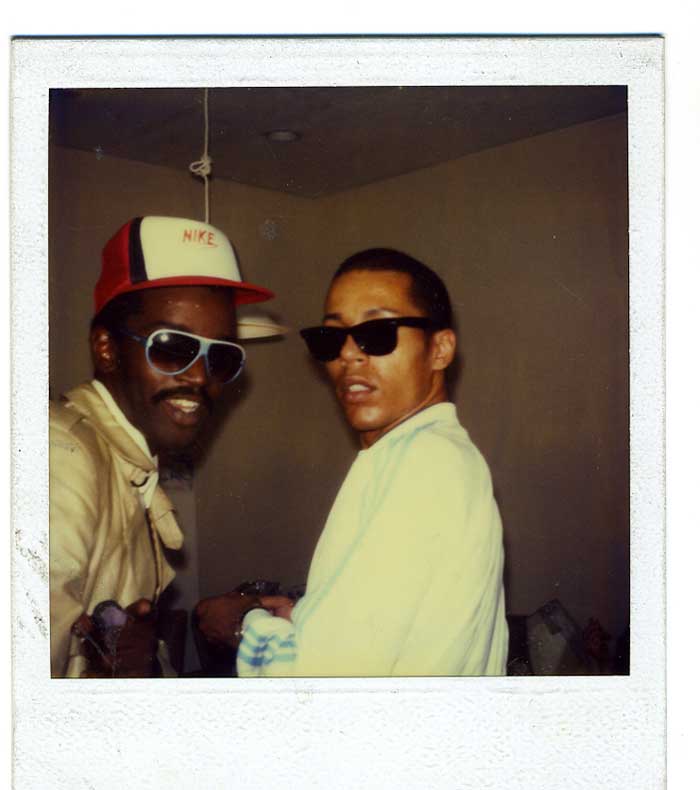
Dondi White was born on April 7th, 1961. Last Wednesday would have been his 49th birthday.
The rare Polaroid photo above was shared with us by his friend Fab Five Freddy.
RIP Dondi.
Posted by marc at 2:42 PM in History |
February 9, 2010

From Rik:
"Today I read your article about the razzle dazzle boats during WWI. I never knew about the history of these kind of paintings on boats. What I did know was a boat situated in Arnhem (the Netherlands), with exactly that kind of painting. It is called "De Boei" (the buoy) and is used for the day and night shelter for drug-addicts. I tried to find out why the boat was painted this way. Does the city of Arnhem want to "hide" these people? I did not find the answer on that. But I do think the opposite happened, a lot of people know about this remarkable boat."
Posted by marc at 7:59 AM in History |
February 8, 2010

Tom McAlister points us to a terrific article on TwistedSifter.comabout the "Razzle Dazzle Camouflage movement:" during WWI.
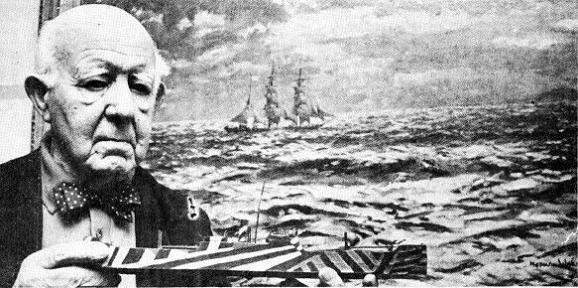
It was the British artist and naval officer Norman Wilkinson who to elude detection by German U-Boats, decided to paint hulls of his naval fleet with geometric patterns and shapes to confuse the Germans on where the ships were headed. As TwistedSifter states - "Then their torpedoes will be shot in vain because they thought you zigged when you really zagged."
Unfortunately today only black-and-white photos exist. Here's some of our favorites:


Posted by marc at 7:54 AM in History |
November 29, 2009
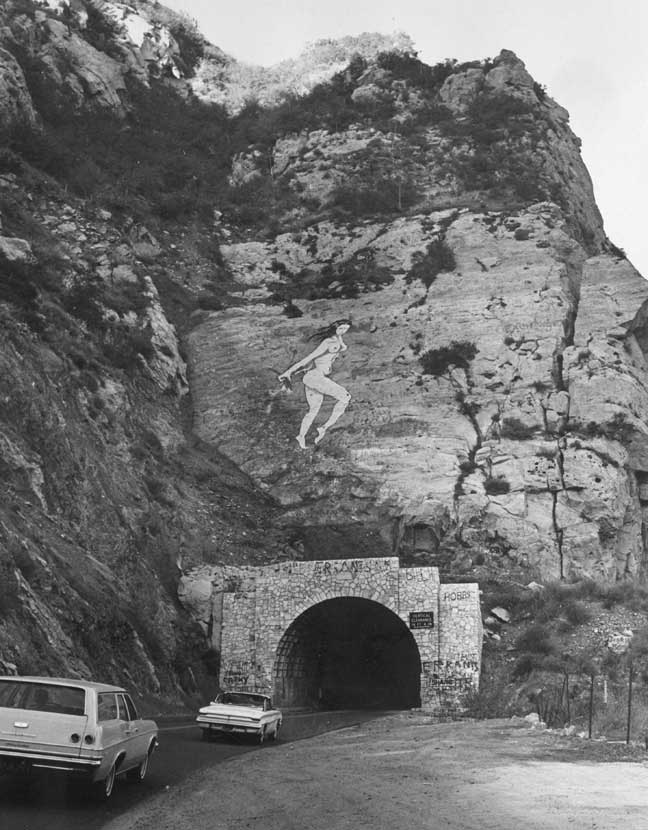
One Saturday morning, on October 29, 1966, a massive 60-foot-tall painting of a nude pink lady holding flowers suddenly appeared as you headed into the tunnel on Malibu Canyon Road.
As word of the massive pink lady spread, and the traffic on the highway grew to a halt, city officials decided "The Pink Lady" had to be removed. Firefighters were called to hosing her off the rocks. It didn't work. Buckets of paint thinner were thrown on the rocks. It only made her pink skin pinker.
As county officials worked on figuring out a way to remove The Pink Lady, a 31-year-old paralegal from Northridge, a woman named Lynne Seemayer, suddenly showed up on the road and admitted that she was the artist who did the piece.
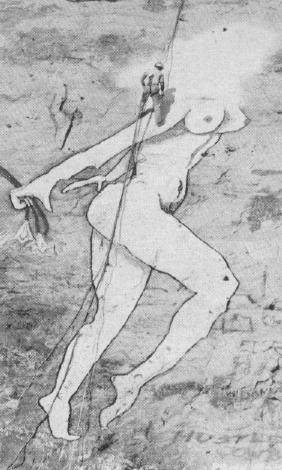
Seemayer said that she was annoyed by the graffiti that was all over the canyon wall ("Valley Go Home" was a memorable slogan) and so, over a 10 month period, she started to secretly climb up under the moonlight and suspended herself by ropes to remove the graffiti.
At 8 P. M. on October 28 Seemayer painted the Pink Lady using ordinary house paint. By dawn it was done.
The Pink Lade lasted only a week. Seemayer sued LA county for $1 million for the destruction of her work, and the county counter-sued for $28,000 in removal costs. Since the painting was on private property, both cases were dismissed by the court.
On Thursday, November 3, workers covered the painting with 14 gallons of brown paint.

Posted by marc at 8:17 PM in History |
November 9, 2009
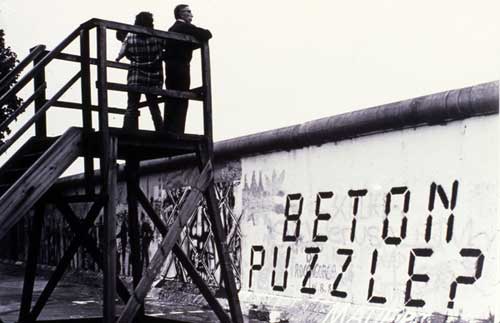
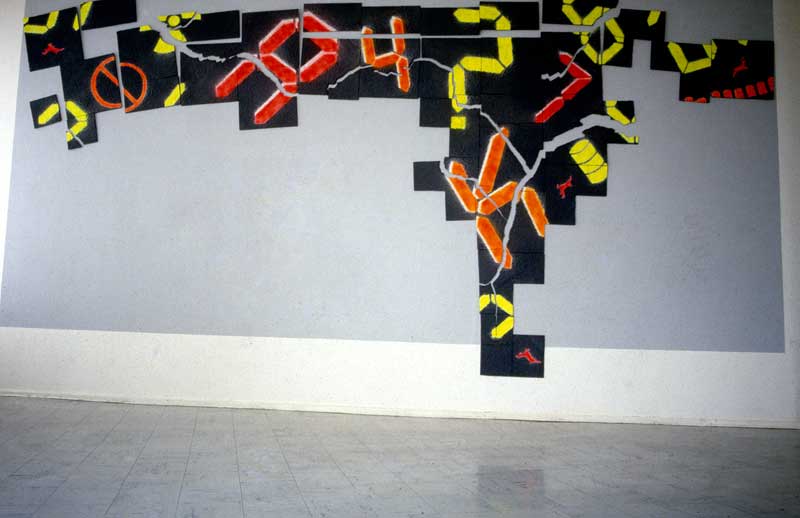
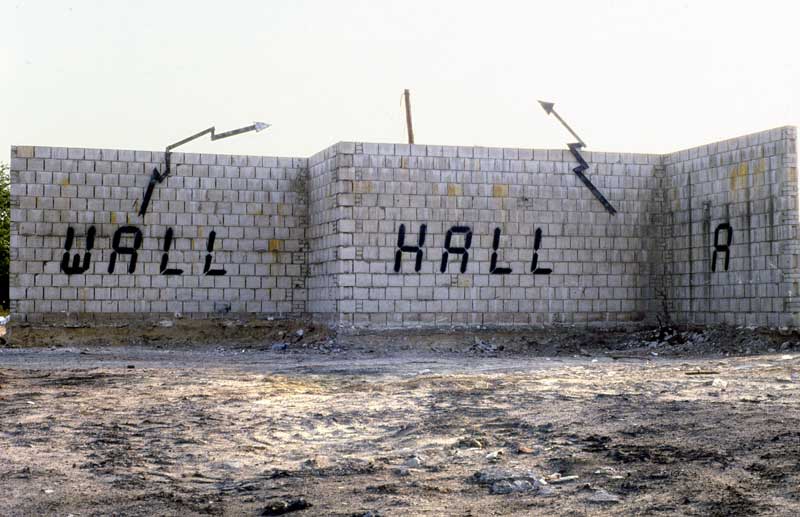
In commemoration of the Berlin Wall coming down on Nov 9 1989 we thought we'd share this story about John Fekner.
In 1986, Fekner spent time in Berlin as part of an invitation group exhibition featuring collaborations by New York and German artists. He visited East Germany entering through Checkpoint Charlie; the visit left a strong impression on Fekner, and subsequently, the work he created while in Berlin.
He created three separate wall installations: a spray-painted fragmented wall that appears to be breaking apart indoors at NGBK; The Beton Puzzle (Concrete Puzzle) painted directly on the Berlin Wall; and, among multiple sites within the city, Fekner collaborated with Peter Mönnig on Wall-Hall-A, an outdoor installation at Potsdamer Platz near the Berlin Wall. The Wall-Hall-A project can be seen in Wings of Desire (Der Himmel über Berlin), a 1987 film by Wim Wenders.
Posted by marc at 8:26 AM in History |
October 23, 2009
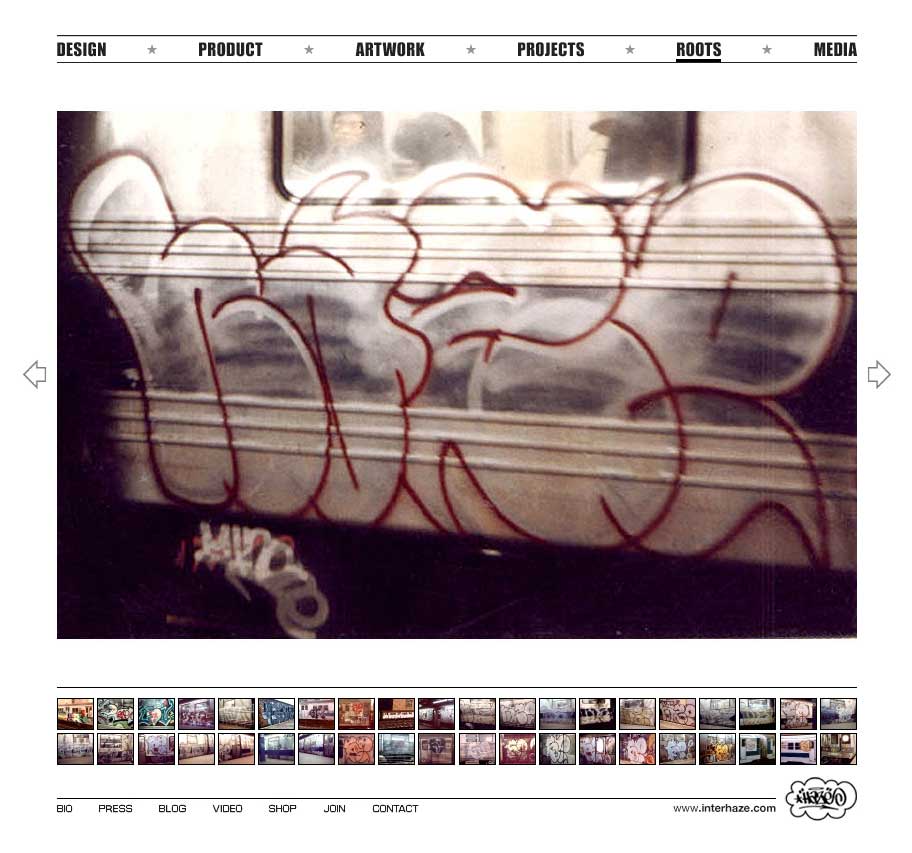
If you haven't checked it out yet, legendary graffiti artists and Brooklyn native, Haze, has finally finished and launched an all new updated and redesigned version of his website :
He tells us: "After the better part of a year working through all my archives, the new site represents a quantum leap in how I am able to showcase my work in so many mediums and I am really pleased with the overall balance that I have tried to achieve with it... it encompasses almost three decades worth of art, design, product and projects."
Click here to check it out.
Posted by marc at 8:28 AM in History |
July 31, 2009

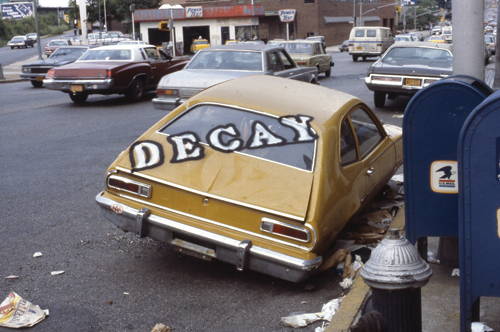
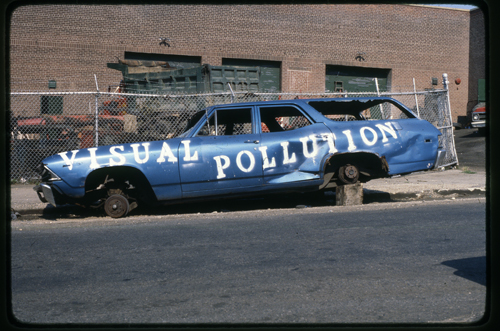
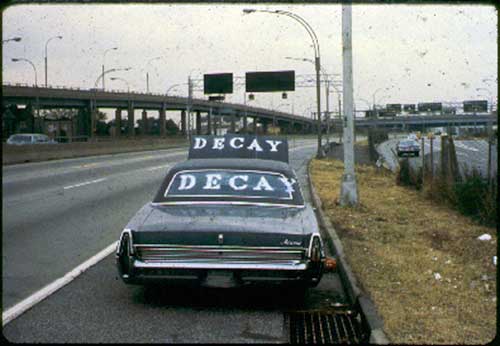
You can see the full archive of John's cars here.
Posted by marc at 7:57 AM in History |
July 10, 2009
Had no idea until this week that back in 1981, the famed French film director Agnes Varda shot a documentary about all murals in Los Angeles. Here's a clip:
A note on IMDB explains:
"The French director Agnes Varda spent a couple of different years in Los Angeles, and this particular year produced her documentary "Murs, murs" and her fiction film "Documenteur". The title means "Walls, walls", but also puns with the word "murmurs." Varda located dozens of murals around LA and filmed them. Many of these are gone today, so this is a true documentary, documenting a wonderful aspect of southern Californian visual culture. She interviews the artists, a truly multicultural and multicolored group--and shows the paintings in their urban contexts. One memorable scene shows a mural at Venice Beach with young people dancing in front of it (probably near where their sons and daughters are roller skating or skateboarding now). An enjoyable movie by a European with deep aesthetic appreciation for marvelous, imaginative, colorful imagery that was considered throwaway pop culture at the time. "
Posted by marc at 3:13 AM in History |
June 25, 2009

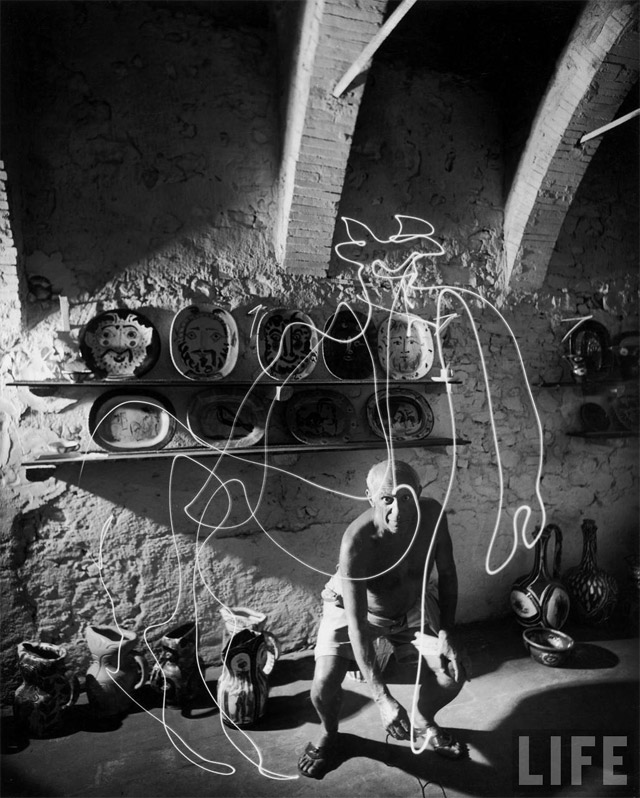

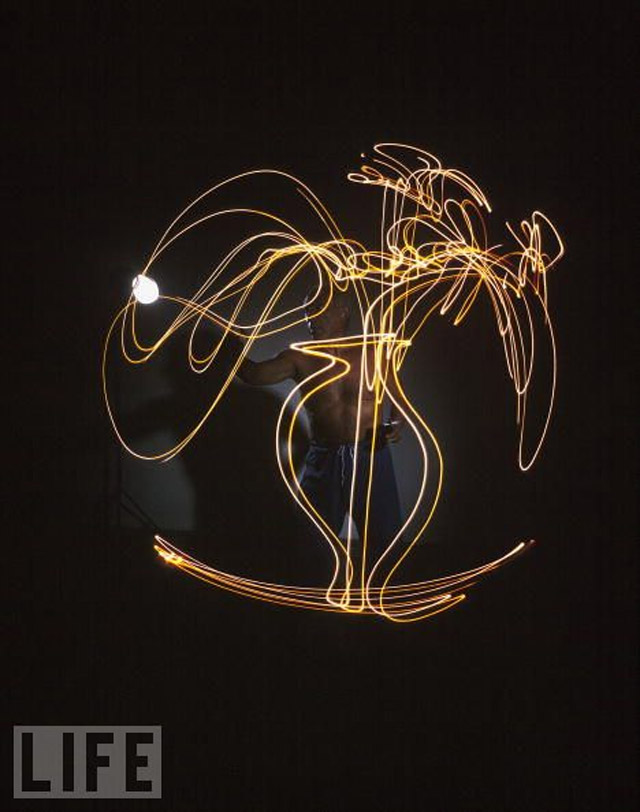
Today and Tomorrow points to a terrific set of photos found in the LIFE archive of Picasso doing light graffiti. They were shot in 1949 by LIFE photographer Gjon Mili when he visited Picasso in Vallauris, France. You can see more of the series here.
Posted by marc at 8:02 AM in History |
May 15, 2009
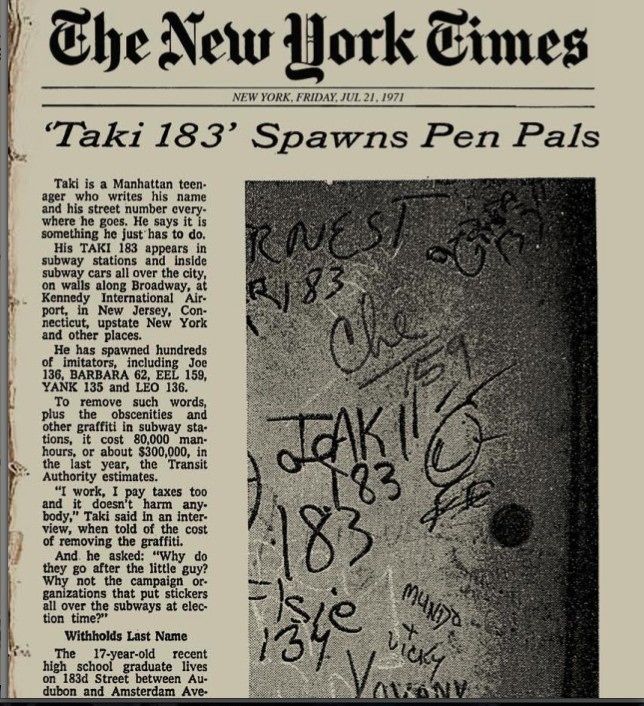
We have mixed feelings about the new Taki 183 website (It's a bit too slick and "commercial" for our tastes) But one thing we did love is that you can download a PDF of the original New York Times article on Taki 183 from 1971 in the biography section.
Posted by marc at 10:31 AM in History |
January 22, 2007

For Sara and I, one of the great rewards of putting together the Wooster on Spring project was having the opportunity to get to know a few of the true icons that pioneered the urban art movement in the late 1970's and early '80's.
Before you can understand today, or look into the future, you have to look back into the past and respect the people who paved the way. And because of this, we felt it was important to have artists like Daze, Lady Pink, Doze, and Blek Le Rat working alongside younger artists like Rekal and Judith Supine inside 11 Spring.
Two of artists who we both felt extremely honored to have included the show were John Fekner and Don Leicht.
For us, John Fekner's pioneering stencil work is as important to the history of the urban art movement as the work of artists like Haring, Basquiat. It was artists like Fekner, Leicht, Hambleton and others who truly held down the scene back in the early 80's.

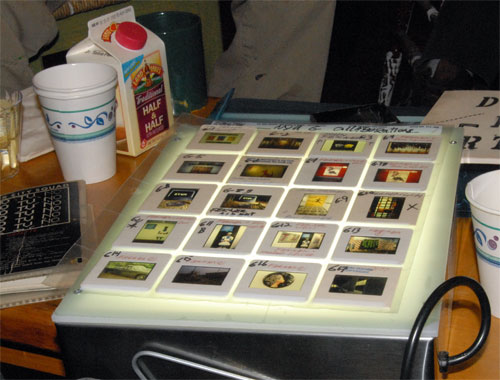
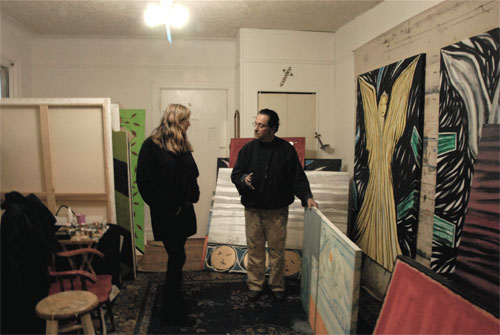
So on Saturday, Sara and I had the great pleasure of being invited by Fekner and Leicht out to their studio in the Bronx. Both artists were extremely gracious, not only in showing us new work that Don has been making, but also in pulling out and showing us photographs, slides, videos, books, and artwork that defined the seminal period in the late 70's and early 80's in New York city. It was a fantastic couple of hours. (Although, we're still kicking ourselves that we didn't bring a video camera to record the conversation.)
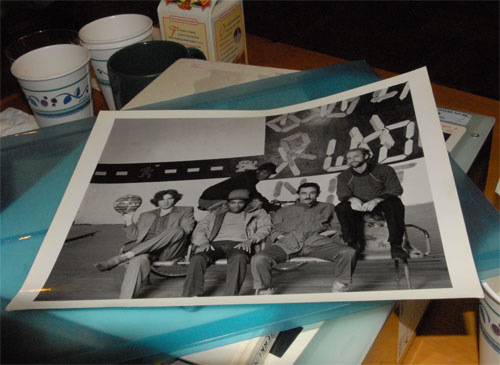
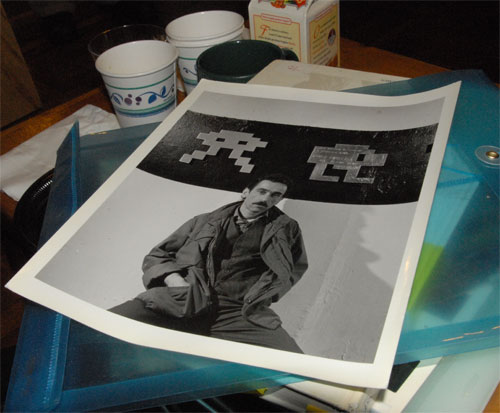
The archive that Fekner and Leicht have is absolutely incredible. Working with Jeewon Shin, John is now going through all of his old slides and videos and painstakingly digitizing all of it. Looking at photographs from shows like Fashion Moda in 1980 reminded us that there was a time in New York when shows like Wooster on Spring were not so rare.
Seeing some of the early videos that John made back in the '80's was great fun. But what was more important was hearing the passion that both John and Don still have for their art. It was truly inspirational.
One of the videos that John showed us on Saturday was Concrete People, one of the early video art pieces that John made in the 80's with a team of artists and musicians including Dennis Mann, Andrew Ruhren, Fred Baca, Jimmy Recchione, Sasha Sumner, Sandy Mann, Sandra Seymour and others.
Watching the video, we realized that not many people get to see this type of work that was done before people had access to the digital tools that they have today. We encouraged John and Jeewon to start to upload some of the old footage and photographs they have to Youtube and Flickr.
We were extremely pleased that yesterday we received an email from Jeewon that our conversation had compelled her to upload Concrete People to the web. You can now watch it for the first time in many years by clicking on the image below...
Our hope is that in the coming months and years, perhaps with our help and involvement, true legends in the art world like Fekner and Leicht (and Hambleton) will begin to get the recognition and that they truly deserve.
Posted by marc at 7:32 AM in Art , History |
January 9, 2007
"A Chicano kid grows up with walls of many kinds around him. When somebody is born into that situation, there are several things he can do. He can ignore the walls and sink into apathy. Or he can become violent and try to blow up the walls. But there is a third way, a way that people have used for centuries. And that is to perform a kind of ritual magic to neutralize the force of the walls by decorating them with signs, symbols, and art. Chicano street writers choose this third way."
- Gusmano Cesaretti, Street Writers (1975)
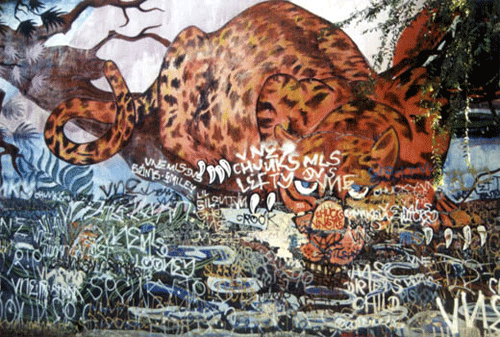
Untitled Indio and V. Cholo 1975 3281 Olympic Blvd. (walkway) Acrylic on stucco, 32' x 24' Leopard crouching in a tree.
If you're interested in learning more about the graffiti and mural scene of East Los Angeles check out this terrific archive of vintage photographs on BrownPride.com. There's an incredible amount of information on the site attached to each picture.
Also, oli binnian found a book in the library the other day that was published in 1975 that has lots of old photos of Chicano graffiti from the early 70's taken by Gusmano Cesaretti. He's upload some of the pics on flickr here.
cheers
Posted by marc at 6:28 AM in Activism , History , Murals |
January 8, 2007
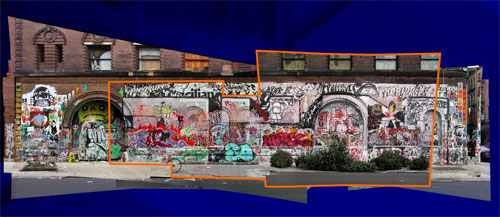
We've been fans of Cassady Curtis' amazing website Graffiti Archaeology, for quite some time. So we were thrilled when Cassidy and a terrific group of photographers took it upon themselves to develop the definitive photographic history of the exterior of 11 Spring. The photos go back four years and feature images from more than 10 photographers including C-Monster, Jake Dobkin, Goggla, guy_on_the_streets, ireallylovecake, Adam Lawrence, Rion Nakaya, Nicholas Noyes, Luna Park, and shoehorn99, and Cassidy.
We can't wait to see how this project continues to evolve as Cassidy suggests that there are still a lot of photos to add in.
Posted by marc at 6:58 AM in History |
April 4, 2006
From Liz comes the following story nicked from Discovery Channel News that suggests that teens created most of the prehistoric cave art.
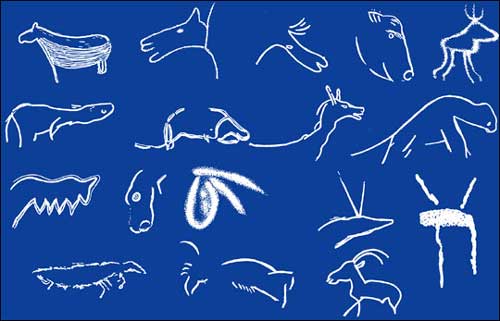
Cave Art: Prehistoric Teen Graffiti?
By Jennifer Viegas, Discovery News
March 31, 2006— Testosterone-fueled boys created most prehistoric cave art, according to a recently published book by one of the world's leading authorities on cave art.
The theory contradicts the idea that adult, tribal shaman spiritual leaders and healers produced virtually all cave art.
It also explains why many of the images drawn in caves during the Pleistocene, between 10,000 and 35,000 years ago, somewhat mirror today's artwork and graffiti that are produced by adolescent males.
"Today, boys draw the testosterone subjects of a hot automobile, fighter jet, Jedi armor, sports, direct missile hit, etc.— all of the things they associate with the Adrenalin of success," said R. Dale Guthrie, author of "The Nature of Paleolithic Art."
Guthrie, who is a professor emeritus in the Institute of Arctic Biology at the University of Alaska Fairbanks, added, "I think the full larder (of) success of the excitement and danger of killing a giant bison or auroch in the Pleistocene was the equivalent of the testosterone art today."
He explained to Discovery News that many of the cave art images of animals are rather graphic, showing, for example, speared animals with blood pouring out of their mouths and noses.
Hunting and animals were not the only things on the cave artists' minds. Guthrie has also noticed that males were drawn sort of like a Ken Barbie doll, with no defined sexual parts save for a simple line designating the penis. Few men were even represented, but the images of women in caves tell a different story.
"Female images dominate and are nude, almost every one full-figured above and below," said Guthrie. "Unlike the other animals, the sculpted, engraved and painted human females and female parts are sometimes done schematically, distilling and inflating the primary and secondary sex characters."
Guthrie also determined that several cave art images are incomplete, overlapping, brief and rudimentary, as though people who were still learning how to draw created them.
This type of sketching dominates cave walls, which also display a handful of works that appear to have been drawn by well-practiced artists, who probably were adults.
Perhaps the most convincing piece of evidence for the new theory consists of 200 handprints that were left in the caves next to the art. These prints were produced by individuals who chewed ochre, held up a hand, and then spit the colorful orange-yellow spew all over the hand, leaving a wall imprint.
Guthrie analyzed the handprints and then compared the results with earlier research on male and female hands. The hand lengths, palm widths and the finger widths and lengths mostly match hands that would have belonged to boys aged nine to 17.
Some teen female handprints were identified in the caves, but young male prints were found more often.
Other handprints resulting unintentionally from people leaning against muddy cave walls, as well as footprints, also suggest that young boys were creating the cave art, according to Guthrie.
Paul Martin, professor of quaternary biogeography at the University of Arizona, told Discovery News that he is inclined to agree with the new theory and findings.
"(Guthrie) has an extraordinary knowledge of wild animal ecology globally, and especially in the Northern Hemisphere," Martin said. "In addition, he brings detailed knowledge of late Pleistocene fossils to his study of cave art. Finally, like many zoologists, especially those with children of their own, he is an astute observer of human behavior."
Martin added, "If he finds that much cave art reflects teenage or preteen preoccupations, I am prepared to believe him."
Posted by marc at 9:23 AM in History |